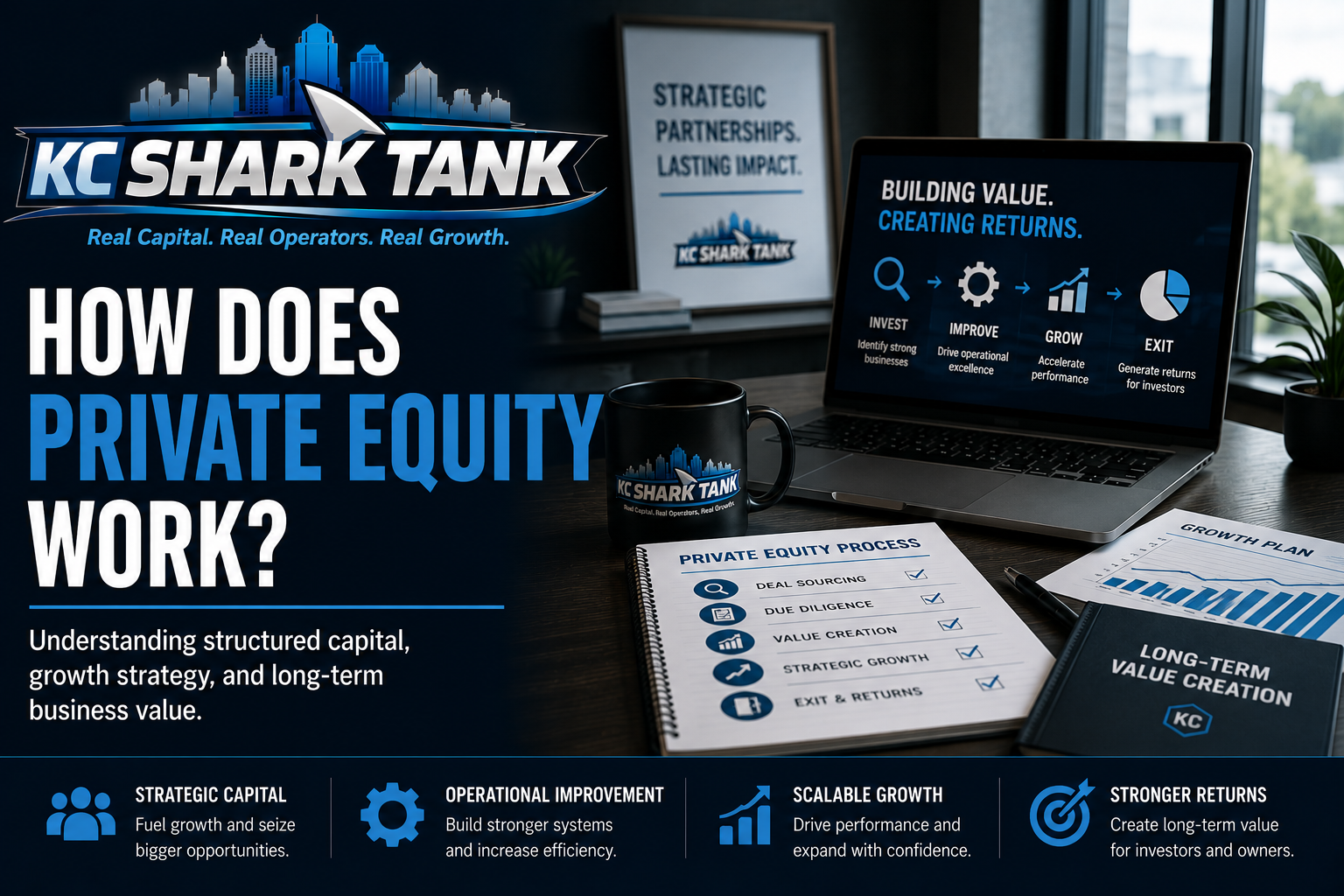
How Does Private Equity Work?
Private equity often comes up when business owners plan to scale, acquire competitors, or prepare for a future exit. Many understand it as a funding source, but lack clarity on how deals actually function from start to finish. This guide explains private equity in practical terms. We cover fund structure, timelines, returns, and how our team helps connect companies and investors through structured capital strategies.
What is Private Equity and How Does it Work
Private equity refers to capital invested in privately held companies with the goal of improving value and generating returns over time. Funds are typically managed by experienced investment firms that identify businesses with strong growth potential.
These investments are not short-term. Most deals are structured around multi-year plans that improve revenue, operations, and long-term company value.
Private Equity Explained for Business Owners and Investors
A typical private equity deal includes:
- Investors who commit capital
- A fund manager who oversees investments
- A business receiving capital and strategic support
Investors seek returns through improved company performance and eventual exit strategies such as a sale or recapitalization.
Why Companies Pursue Private Capital
Businesses often seek private funding to:
- Expand operations or locations
- Fund acquisitions
- Improve infrastructure or leadership
- Prepare for a strategic exit
Access to experienced capital partners often brings operational insight alongside funding.
Key Takeaway: Private equity is structured capital paired with strategic oversight. Companies gain funding and guidance to increase long-term enterprise value.
Who is Involved in a Private Equity Deal
Understanding each role helps clarify how decisions are made and how returns are generated.
General Partners and Fund Managers
General partners manage the fund and oversee investments. Their responsibilities include:
- Sourcing deals
- Conducting due diligence
- Managing portfolio companies
- Executing exit strategies
They earn compensation through management fees and a share of profits.
Limited Partners and Investors
Limited partners provide capital but do not manage daily operations. These investors often include:
- Institutions
- Family offices
- Accredited investors
Their returns depend on the performance of the fund’s investments.
Portfolio Companies and Advisors
Businesses receiving funding become portfolio companies. Advisors and capital consultants help structure deals, prepare financials, and connect the right investors to the right opportunities.
How Private Equity Funds are Structured
Most funds operate under a limited partnership model. This structure provides clear roles, tax efficiency, and defined liability for each party.
Limited Partnership Model and Control
The general partner controls investment decisions and fund management. Limited partners contribute capital and share in returns without direct operational control.
Why This Structure is Widely Used
Common advantages include:
- Pass-through tax treatment
- Limited liability for investors
- Defined governance and reporting
- Alignment of incentives between managers and investors
Fees and Compensation
Private funds typically generate revenue through:
- Annual management fees
- Performance-based carried interest
- Exit-related profit sharing
These structures align performance with investor outcomes.
The Private Equity Fund Lifecycle
Every fund follows a defined lifecycle, usually spanning 7–10 years.
Formation Stage
During formation, managers:
- Define investment strategy
- Raise capital from investors
- Establish legal and financial structure
- Begin sourcing opportunities
Investment and GrowthSstage
Once capital is secured, the fund:
- Acquires or invests in companies
- Implements growth strategies
- Improves operations and financial performance
- Expands market reach
Exit and Return Stage
Returns are generated through:
- Strategic sales
- Recapitalizations
- Public offerings
- Investor distributions
Pro Tip: Early preparation improves exit value. Companies that maintain clean financials and clear growth plans attract stronger investor interest and higher valuations.
Benefits and Risks of Private Equity
Understanding both sides helps investors and business owners make informed decisions.
Benefits for Investors and Businesses
Private capital can provide:
- Access to significant growth funding
- Strategic guidance and governance
- Operational improvements
- Long-term value creation
Businesses often gain resources that accelerate expansion and improve profitability.
Risks to Consider
Private investments also carry risks:
- Long holding periods
- Limited liquidity
- Performance variability
- Market and operational challenges
Proper due diligence and structured planning reduce these risks significantly.
Need expert help securing capital or structuring a deal? Contact KC Shark Tank for a confidential consultation.
How KC Shark Tank Supports Growth and Private Equity
We partner with established Kansas City home-service businesses that want to grow without giving up control. Our model combines minority growth capital with proven marketing and operational systems so owners can scale revenue, improve margins, and build long-term value.
Minority Growth Capital and Support
We provide minority equity funding designed to help contractors expand while keeping day-to-day ownership and decision-making. That capital is often used for:
- Hiring and team growth
- Equipment and fleet expansion
- Marketing and lead generation
- Working capital for scaling
Our goal is to help businesses grow responsibly while maintaining control.
Marketing and Operational Systems
Funding alone does not drive results. We also provide access to marketing infrastructure, lead generation support, and operational systems that help businesses scale efficiently. This includes guidance around workflows, tracking, and performance metrics so growth stays structured and measurable.
Built for Contractors Ready to Scale
We focus on local home-service companies that want steady growth, stronger systems, and a clear path to higher enterprise value. Our approach helps owners expand revenue, improve operations, and create long-term opportunities through structured private equity partnerships.
Is Private Equity the Right Fit for You?
Not every business or investor benefits from private capital. Fit depends on goals, timeline, and readiness.
For Business Owners
Private funding may be suitable if you:
- Plan significant growth or expansion
- Need acquisition capital
- Want strategic guidance
- Are preparing for eventual exit
For Investors
Considerations include:
- Long-term investment horizon
- Risk tolerance
- Accreditation requirements
- Portfolio diversification goals
Key Takeaway: The right capital partner improves outcomes. Clear strategy and preparation lead to stronger deals and better long-term performance.
Final Thoughts on Private Equity
Private capital remains one of the most effective tools for scaling businesses and generating long-term returns. Clear structure, aligned partners, and disciplined execution drive successful outcomes. Our team works with investors and business owners who want structured growth and qualified capital connections. Contact KC Shark Tank to discuss funding strategy, investor access, or deal preparation, and take the next step with private equity.